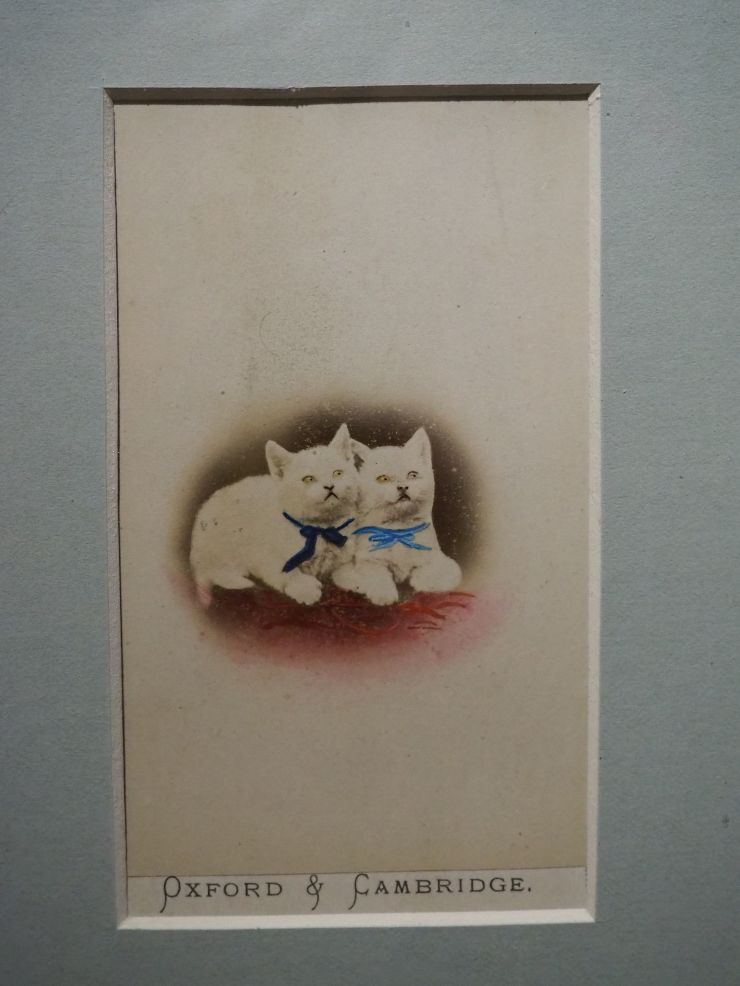
At The Museum of Cambridge
It is a sunny day, and as you stroll merrily down King’s Parade, you cross paths with a tabby cat. It stops to observe you, a paw raised in curiosity, and for a moment you think, shall I approach? Is this cat friendly? Is it wondering whether I will provide a belly rub (if I dare touch the belly), or is it simply mulling over the many ways in which it could destroy me?
Many might feel the risk to be too high, but being the daredevil that I am, I would always roll the dice and approach. Cats are far too interesting to ignore. But what of the people of Cambridge? Do they share this appreciation of catkind?
Enter The Museum of Cambridge with their marvellous exhibition, Cats of Cambridge. Housed in a 17th-century former coaching inn, the museum itself covers centuries of social history with exhibits of folklore, local art and various historical domestic artifacts. But, from 31st July to 5th October, it has converted lovingly into a ‘meowseum’ for all those curious cat lovers out there.
On the opening night, while queuing at the entrance, I was entertained by the local performers outside the neighbouring Enid Porter building, and the mounting excitement of my fellow ticket-holders was palpable.
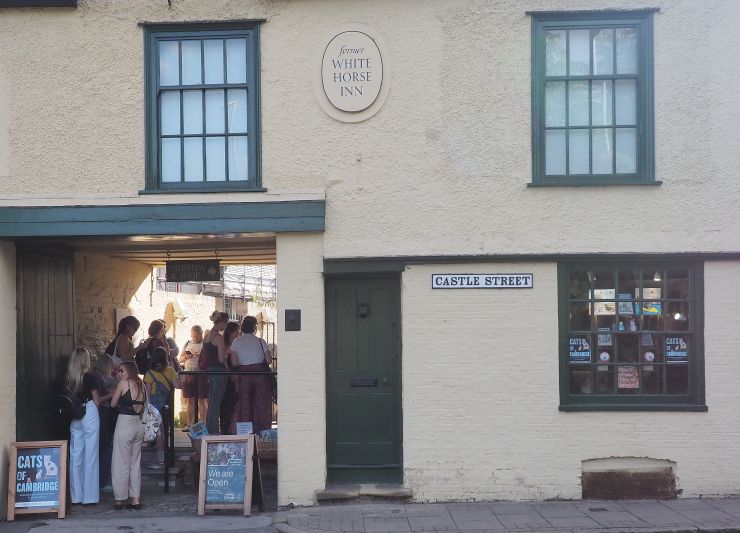
The staff then invited us into the museum and allowed us to navigate through the nine stops (as it is said cats have nine lives) that were set out across the charming rooms and crooked hallways of the building. In addition to this, there were three talks repeated throughout the evening, the first of which being ‘College Cats’.
Originally enrolled at the colleges as chief mousers, cats soon became loving companions of professors and students alike. As we stood in the bar, which was apparently propped up by ex-resident cat Winston, the first speaker delighted us in the folk story of Sir Isaac Newton’s annoyance at his cat (hilariously named ‘Spithead’) scratching at the door while he was working at Trinity College. To combat this, he allegedly had a carpenter cut a large and small hole in the door, one for adult cats and one for kittens, ultimately inventing the cat flap.
We then heard an account of a Downing College cat that took on a guard dog, a tale of the determined at Selwyn College that categorised a basset hound as a large cat in order to bypass rules where only cats could stay on the premises, and the story of ‘Silly’, the Trinity Hall cat that lunched with the students in the dining hall.
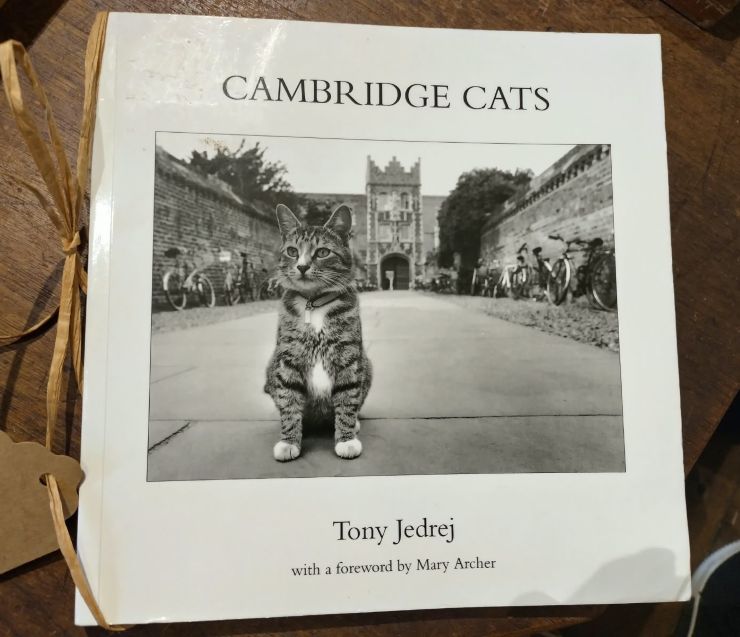
Finally, and my personal favourite, was the story of three-legged Jasper, a famous feline at the Marshall Library of Economics who hosted “Tea with Jasper” events designed to de-stress students during exam season. This one is very much real; see this BBC article for photos. There was also a selection of books written about the famous cats of Cambridge on display for perusal.
We then ventured into the dining room for the second talk, ‘Cat-ography’. Here, we saw images and photos throughout time showcasing cats of ancient Greece, Egypt, China and of course, Cambridge. It was interesting to hear of how, as religion took hold, the role of cats became contradictory. Yes, cats were excellent for vermin control and made great companions, but their association with witchcraft and the belief that they represented the devil threatened their reputation, not to mention their lives. A worthy comparison was made here to women through time experiencing similar trials and tribulations connected to their role in society.
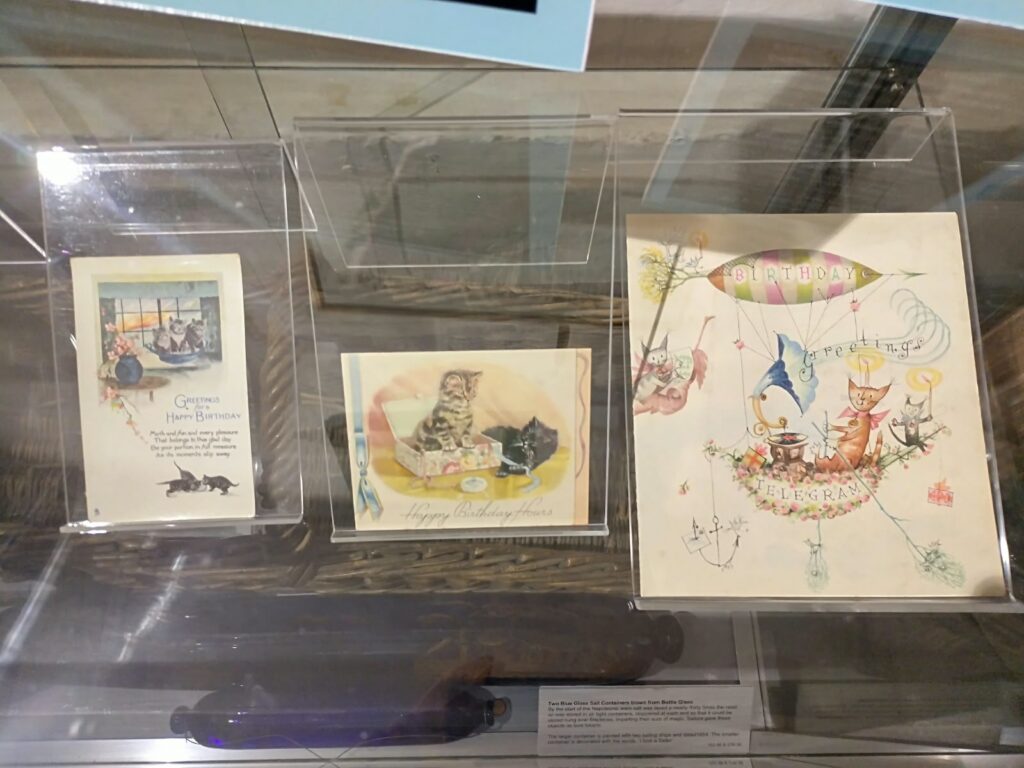
The speaker then lightened the mood with talk of cats in medieval art, most notably with the discovery of paw prints on medieval manuscripts. Additionally, she spoke of the English illustrator Louis Wain, best known for his drawings of anthropomorphised cats that were so influential that, according to H.G. Wells, “English cats that do not look and live like Louis Wain cats are ashamed of themselves.” To finish, we were shown some humorous photos of ‘fancy ladies’ posing with their rather distinguished feline companions. It is also worth noting that this room also contains the worthy ‘Women at Cambridge’ exhibit.
Devastatingly, I could not make the final ‘Cats in Folklore’ talk, but I did explore the Fen and Folklore room in which it was to be held. One highlight was the ‘Lucky Cats’ exhibit, which contained various artifacts, one being an impressive cat skull which was representative of those that have been found buried within the walls of local buildings in supposed attempts to protect the inhabitants from witchcraft.
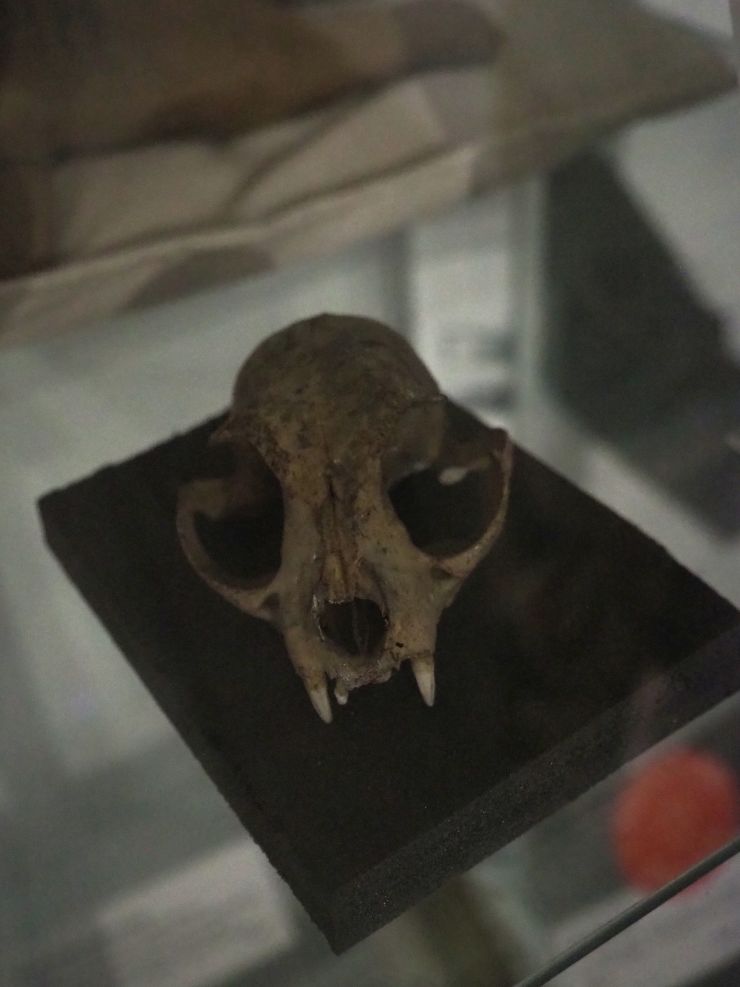
The exhibit label also told of a Japanese folklore tale where, during the Edo period, a cat named Tama lead the ruler Li Naotaka into the Gotoku-ji Temple, saving him from a lightning bolt. According to the legend, Tama brought good fortune to both the temple and the passers by, and is represented in modern times in the form of the beckoning cat figurine, the Maneki-neko, which can be found in many of Cambridge’s restaurants and shops.
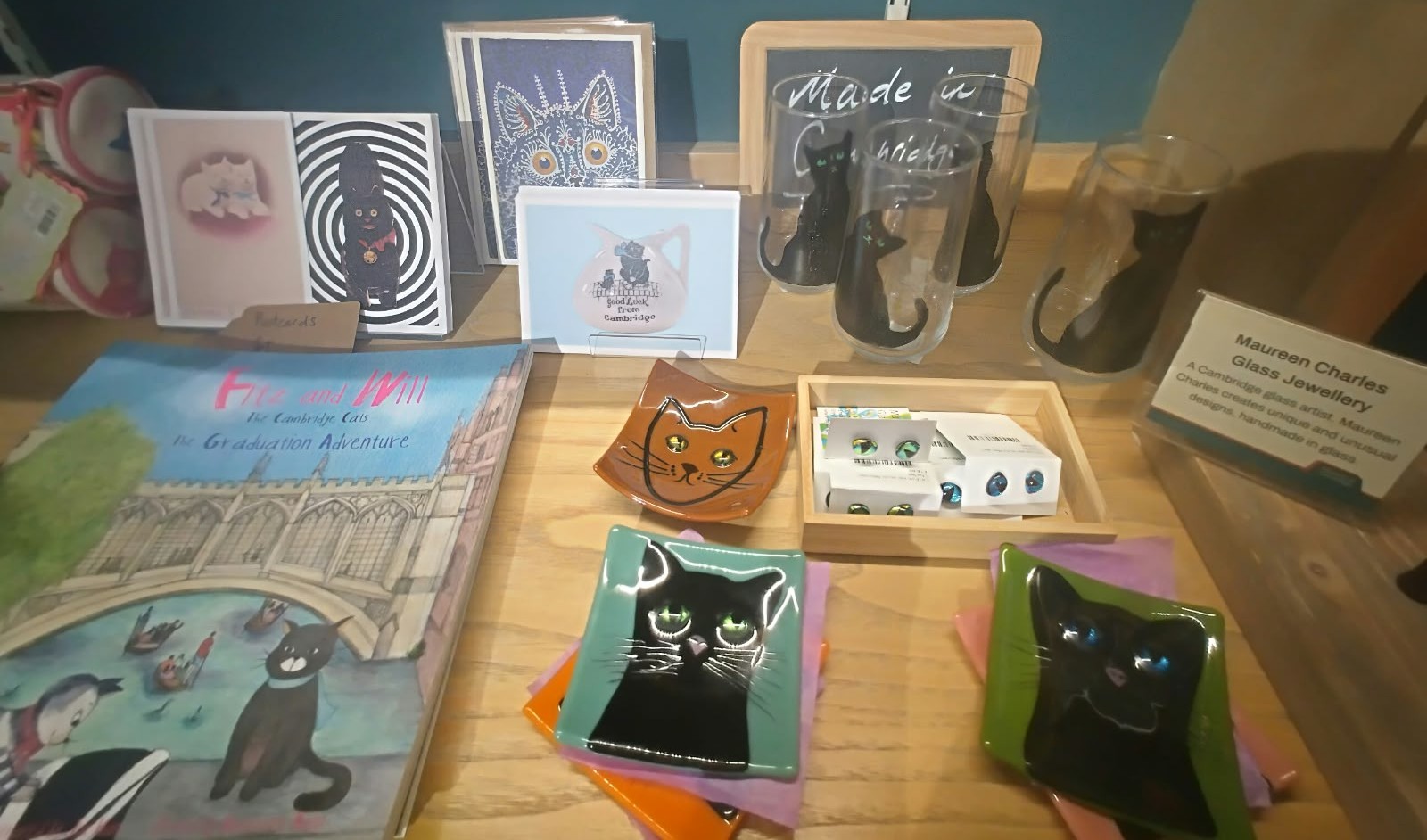
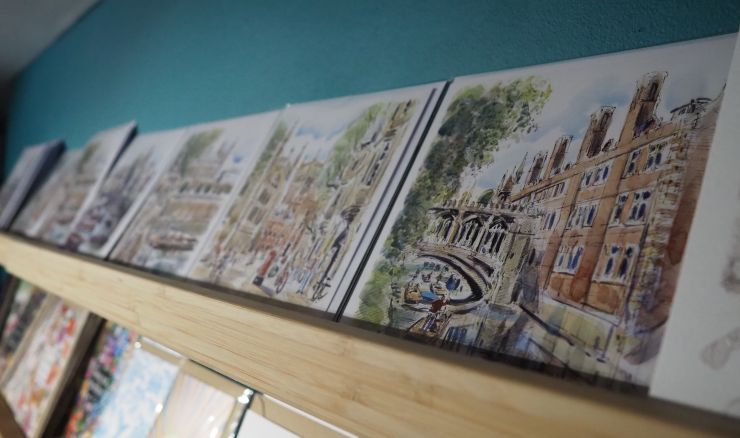
As we filed out of the museum, I was thrilled to see a variety of handmade ceramics, books, jewellery, crafts and postcards, all made by local small businesses in Cambridge. There was also the opportunity to enter a prize draw to win a small selection of these gifts.
So, what do we think – are cats friend or foe? Although I did not think it possible, I left the Cats of Cambridge exhibition more in love with cats than ever before. Whatever your view, it is hard not to be impressed by their history, especially that which is entwined with the city of Cambridge. That being said, I will probably continue to look at my own cat on a daily basis and wonder, does he really love me, or is he secretly hatching a plan to destroy me and everyone I hold dear? Only time will tell.