Author: Lauren Binge

  • Cambridge Market (Market Square)

    Cambridge Market (Market Square)

    Belgian waffles? Olives? Greek Gyros? Doughnuts? My first thought is that someone better hold me back.

    But alas, I am in control of my own destiny, and I always choose food.

    That’s the first thing that hits me when crossing over from Petty Cury to Cambridge Market Square; the unmistakeable aroma of street food. A small antenna in my brain springs to attention, and I forget all about that birthday card I was supposed to buy from Marks and Spencers. After reminding myself that 11:10 is too early for lunch, I press on, walking confidently past the Belgian Waffles stall (obviously making a mental note to circle back to that later), and come to an abrupt stop at the end of a queue at the Brown Bread stall, which is conveniently filled with fresh bread, cakes and pastries.
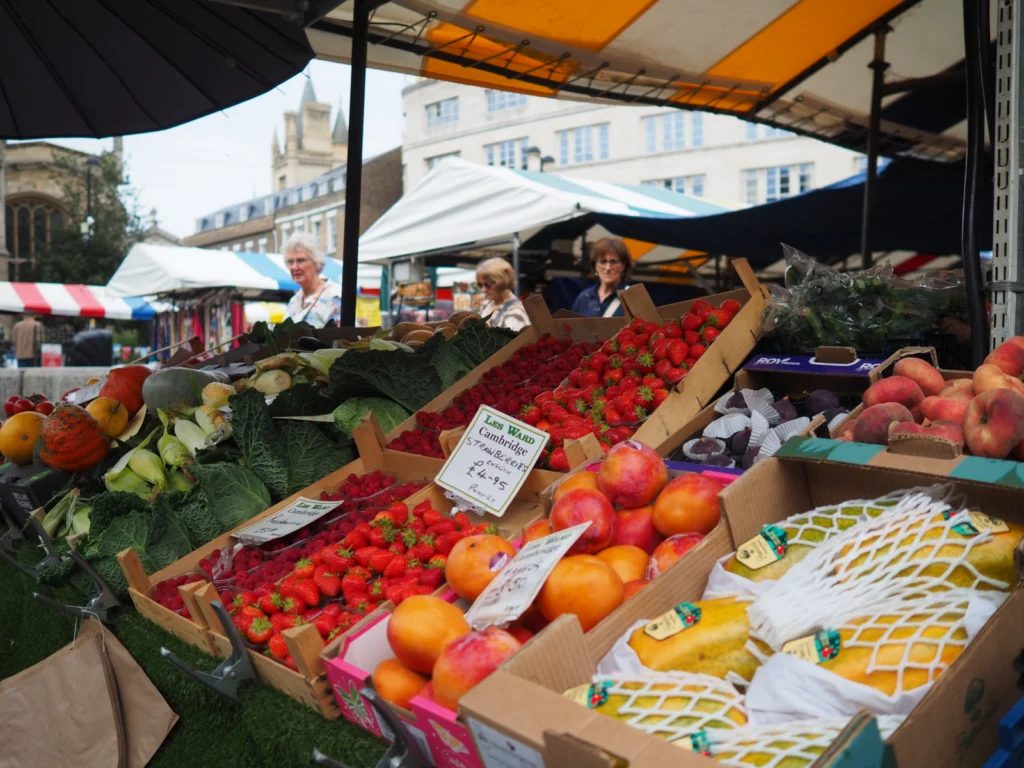
    Market stall with fruit and vegetables.
    The market provides a variety of fresh fruit and vegetables.

    Several minutes later, with an iced doughnut (adorned with multicoloured sprinkles) in hand, I continue on my journey through the delights of the market. Firstly, I encounter an antique pitch selling military coins and ornaments, the Fen Tomato Farm stall boasting Cambridgeshire plump tomatoes and fresh seasonal produce, then a group of excited young women surrounding a stall filled with various glittering trinkets and jewellery.

    Many consider the market to be the social and commercial hub of the city, with British trade dating back to the the medieval period. In the modern era, there has been a multicultural explosion, and the market now boasts a vast range of international produce, which truly reflects the diversity of Cambridge. It is not surprising then that as I weave through the corridors of the market, the air is filled with chatter and laughter in a variety of languages.
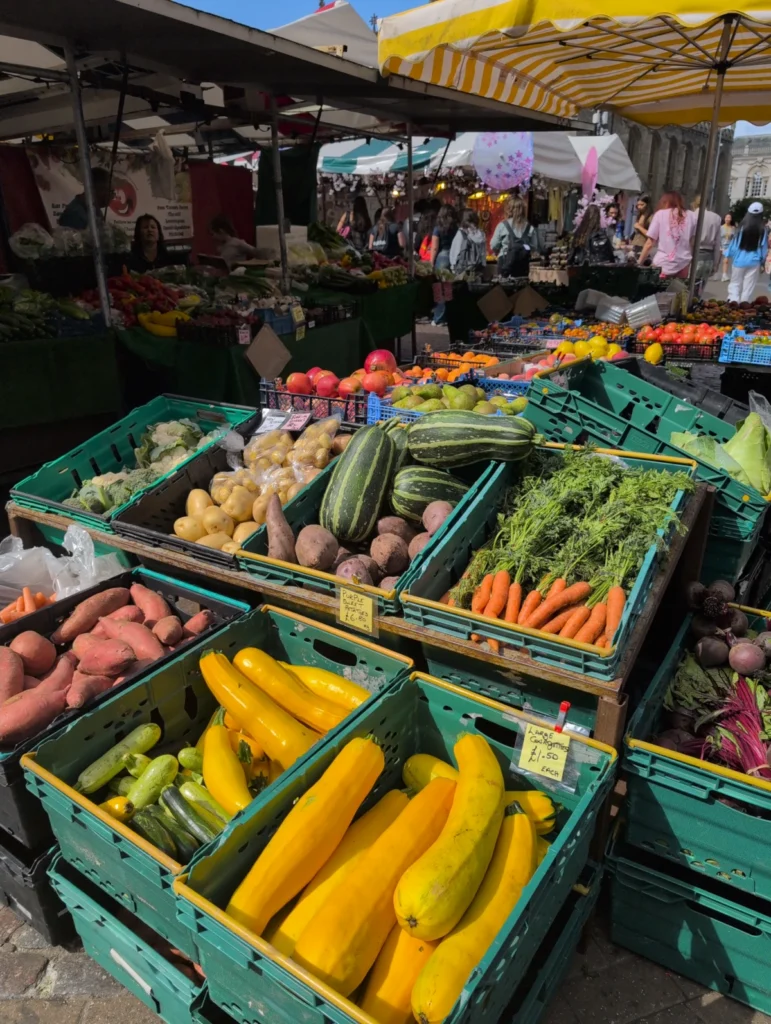
    A stall selling fruit and vegetables.

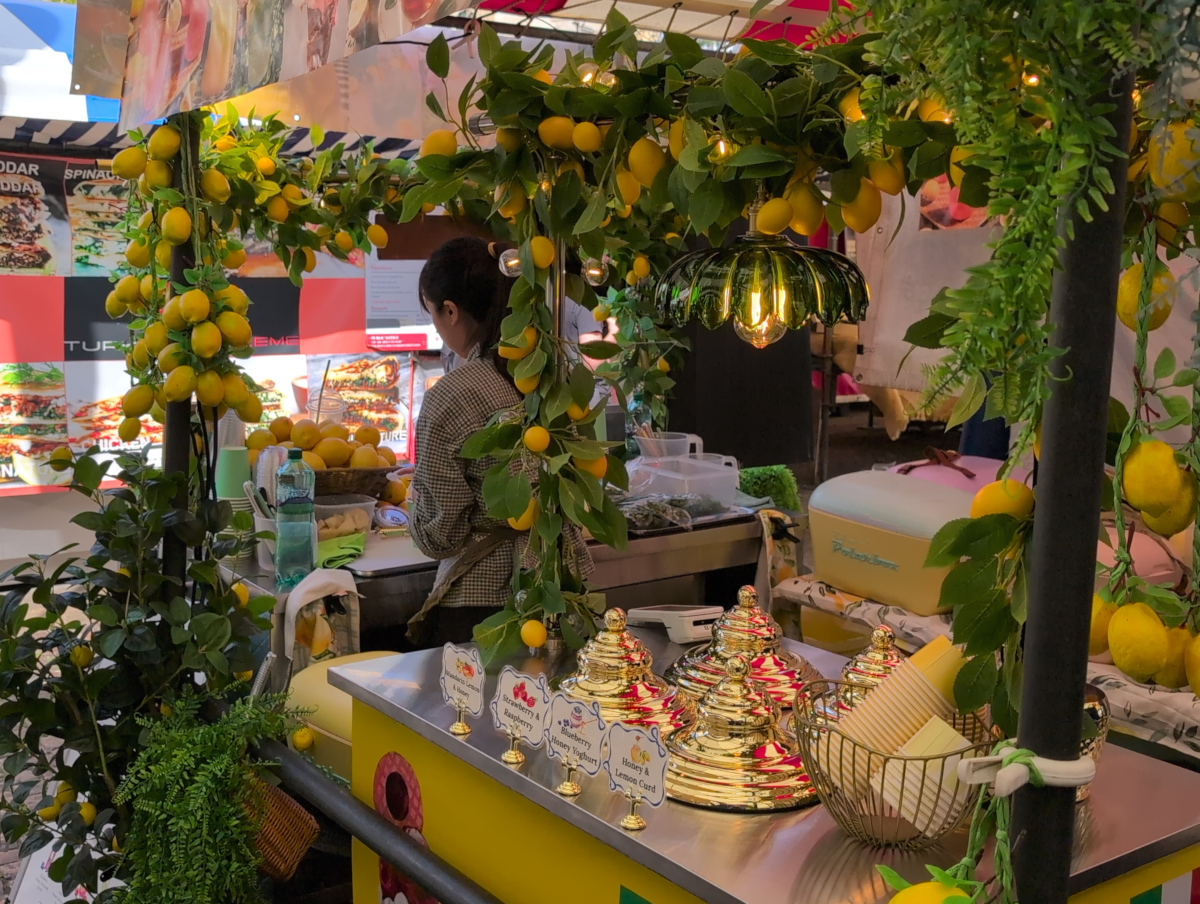
    Most of this originates from the hot food vendors that I pass next. There is the Caribbean Barn offering a classic roast with a Caribbean twist, Azuma serving Japanese and Malaysian foods, and The King of Wraps stall which boasts a varied menu with gluten-free and vegan options available. Leaving the sizzling pans behind, I halt at the stylish Honey Lemon pitch which is decorated in a beautiful lemon tree arch. The colourful menu offers hot and cold honey lemonade, as well as gelato and sorbet.
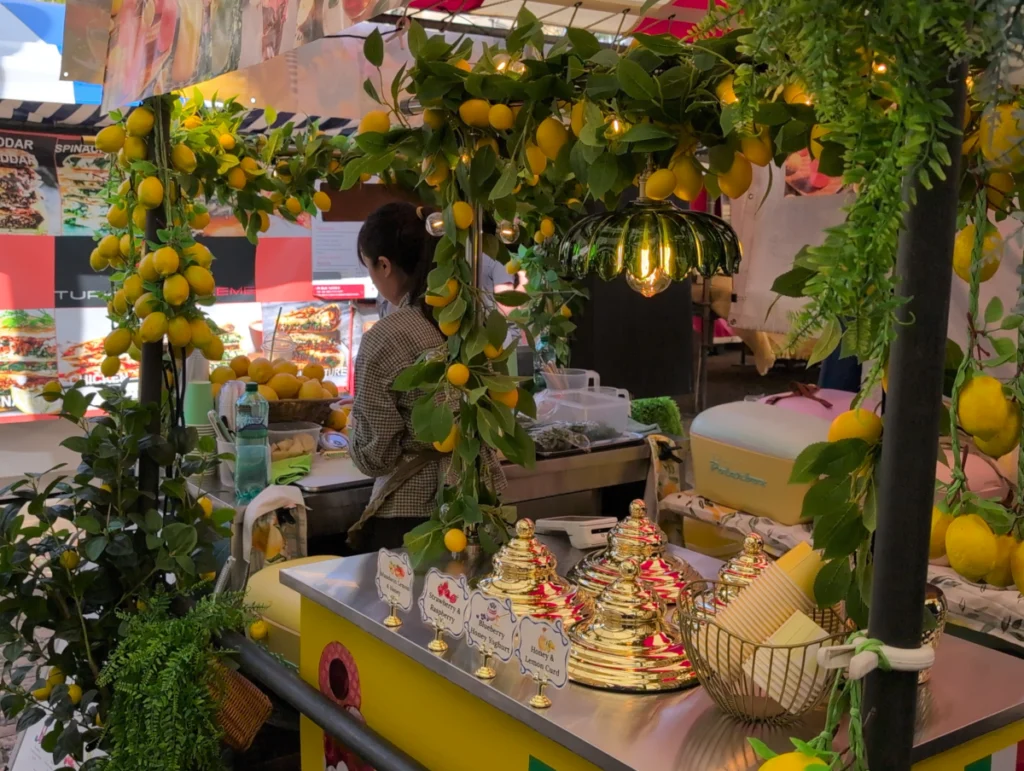
    Honey and Lemon Stall.
    The stylish Honey Lemon stall.

    After perusing the many other stalls selling vintage clothes, books, coffee and oils, I reach the final row opposite Great St Mary’s church. Here, I receive an education in olives at Borough Olives, which serves Greek, Italian and Spanish olives as well as other Mediterranean goods such as almonds and sun-dried tomatoes. After another brief debate with myself at what constitutes as lunch time lingering around Just Greek Gyros, I come to the final stall, Cam Cattle, a local family farm selling various cuts of beef.
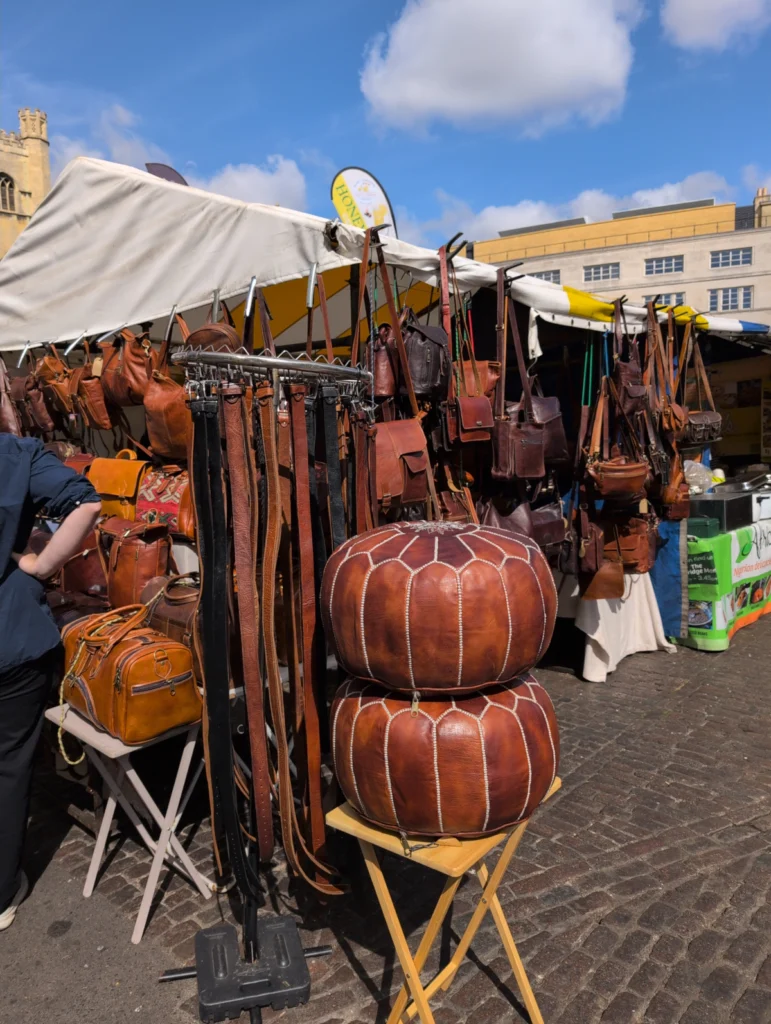
    Entrance to Cambridge Market on Market Square.

    What makes this market special is it trades seven days a week and vendors vary; alongside the street food, the general market traders also sell clothes, books and plants as well as phone accessories and bike repair services. I visited on a Sunday, and the square housed providers selling handmade arts, crafts and local produce.

    Being a local I am obviously biased, but I have been to many city markets and I must say that this Cambridge market is undoubtedly my favourite. Now I must excuse myself, as I have the most insatiable craving for a doughnut…
  • Cats of Cambridge

    Cats of Cambridge

    It is a sunny day, and as you stroll merrily down King’s Parade, you cross paths with a tabby cat. It stops to observe you, a paw raised in curiosity, and for a moment you think, shall I approach? Is this cat friendly? Is it wondering whether I will provide a belly rub (if I dare touch the belly), or is it simply mulling over the many ways in which it could destroy me?

    Many might feel the risk to be too high, but being the daredevil that I am, I would always roll the dice and approach. Cats are far too interesting to ignore. But what of the people of Cambridge? Do they share this appreciation of catkind?

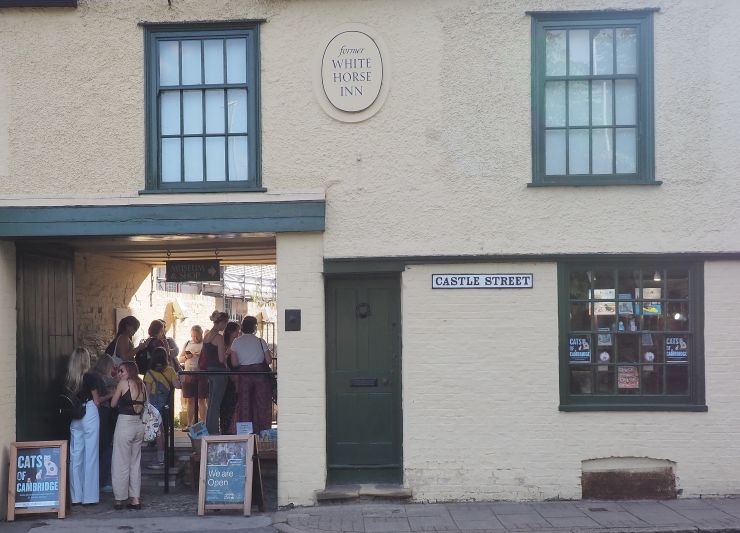
    Enter The Museum of Cambridge with their marvellous exhibition, Cats of Cambridge. Housed in a 17th-century former coaching inn, the museum itself covers centuries of social history with exhibits of folklore, local art and various historical domestic artifacts. But, from 31st July to 5th October, it has converted lovingly into a ‘meowseum’ for all those curious cat lovers out there.

    On the opening night, while queuing at the entrance, I was entertained by the local performers outside the neighbouring Enid Porter building, and the mounting excitement of my fellow ticket-holders was palpable.

    People queuing at the opening night of Cats of Cambridge at The Museum of Cambridge.
    Opening night of the Cats of Cambridge exhibition.

    The staff then invited us into the museum and allowed us to navigate through the nine stops (as it is said cats have nine lives) that were set out across the charming rooms and crooked hallways of the building. In addition to this, there were three talks repeated throughout the evening, the first of which being ‘College Cats’.

    Originally enrolled at the colleges as chief mousers, cats soon became loving companions of professors and students alike. As we stood in the bar, which was apparently propped up by ex-resident cat Winston, the first speaker delighted us in the folk story of Sir Isaac Newton’s annoyance at his cat (hilariously named ‘Spithead’) scratching at the door while he was working at Trinity College. To combat this, he allegedly had a carpenter cut a large and small hole in the door, one for adult cats and one for kittens, ultimately inventing the cat flap.

    We then heard an account of a Downing College cat that took on a guard dog, a tale of the determined at Selwyn College that categorised a basset hound as a large cat in order to bypass rules where only cats could stay on the premises, and the story of ‘Silly’, the Trinity Hall cat that lunched with the students in the dining hall.

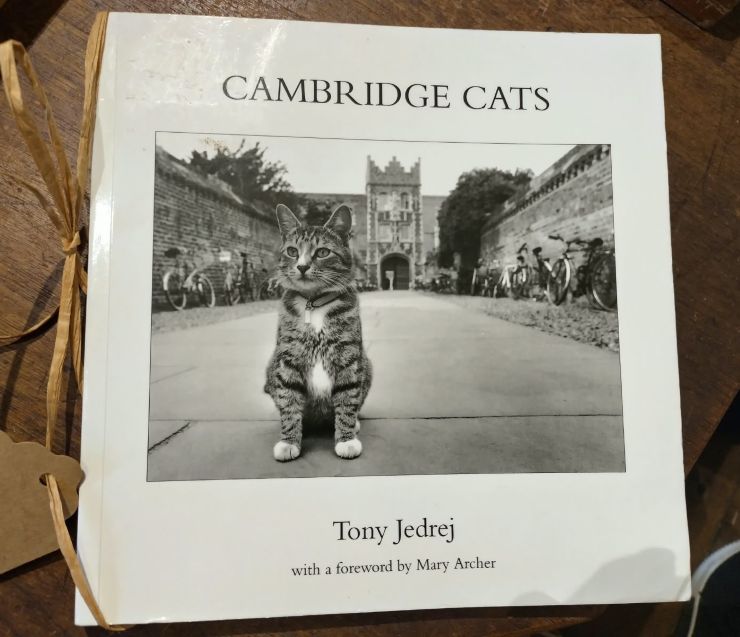
    Finally, and my personal favourite, was the story of three-legged Jasper, a famous feline at the Marshall Library of Economics who hosted “Tea with Jasper” events designed to de-stress students during exam season. This one is very much real; see this BBC article for photos. There was also a selection of books written about the famous cats of Cambridge on display for perusal.

    A book, 'Cambridge Cats', written by Tony Jedrej.
    Cambridge Cats, written by Tony Jedrej,

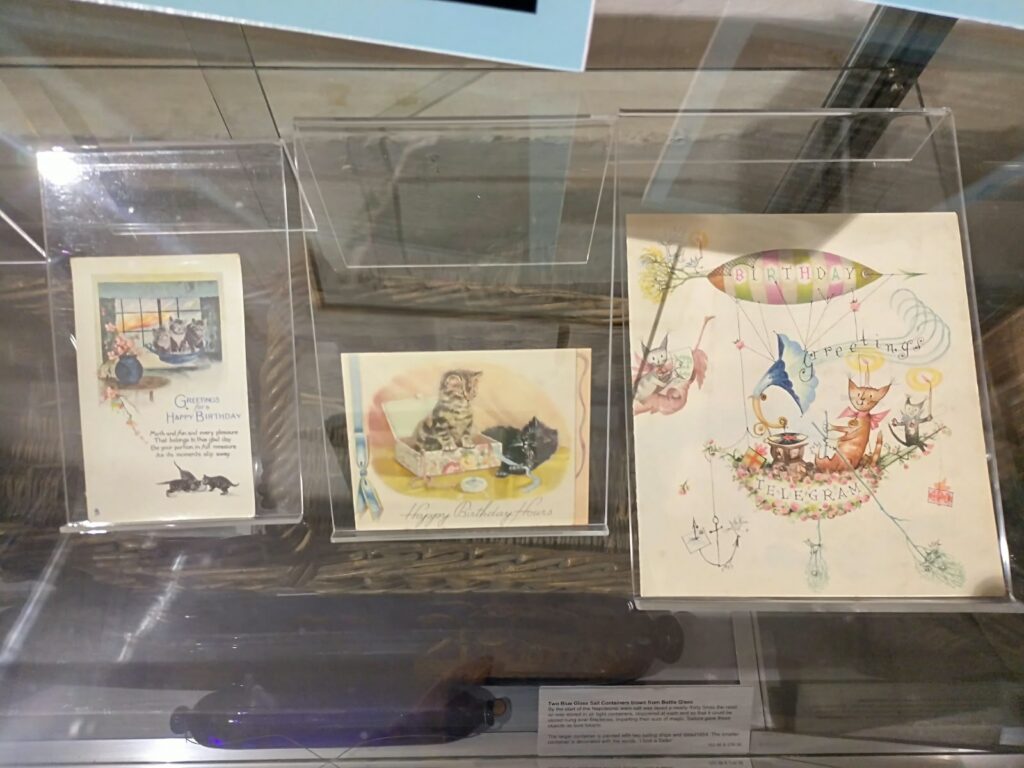
    We then ventured into the dining room for the second talk, ‘Cat-ography’. Here, we saw images and photos throughout time showcasing cats of ancient Greece, Egypt, China and of course, Cambridge. It was interesting to hear of how, as religion took hold, the role of cats became contradictory. Yes, cats were excellent for vermin control and made great companions, but their association with witchcraft and the belief that they represented the devil threatened their reputation, not to mention their lives. A worthy comparison was made here to women through time experiencing similar trials and tribulations connected to their role in society.

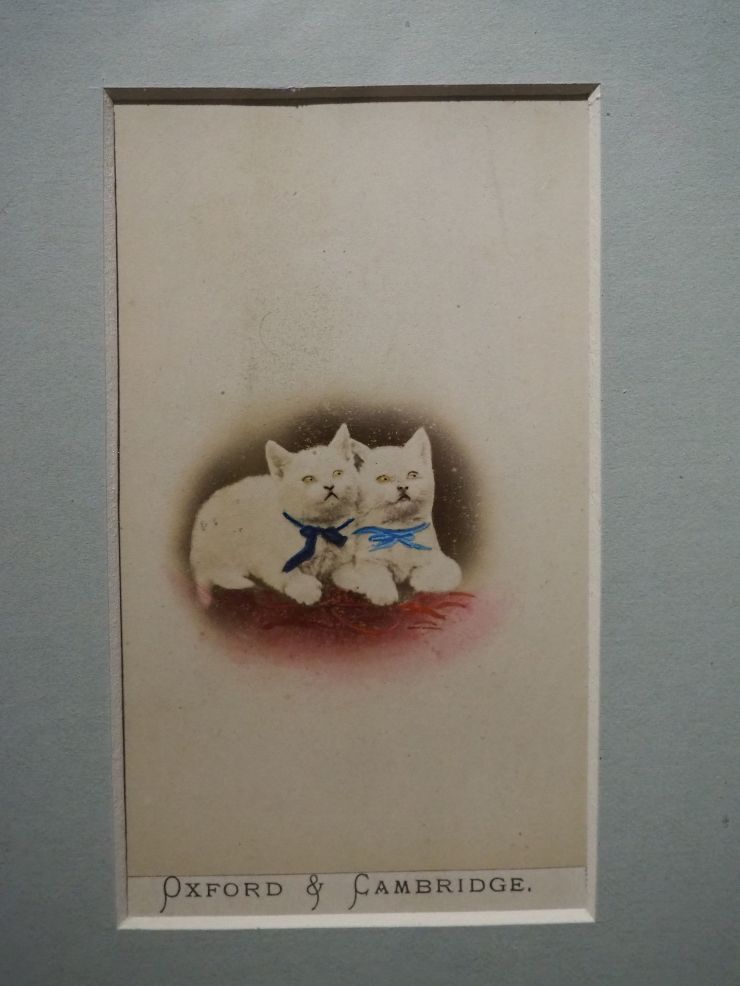
    Three greetings cards with images of cats.
    Greetings cards with cat designs on display.

    The speaker then lightened the mood with talk of cats in medieval art, most notably with the discovery of paw prints on medieval manuscripts. Additionally, she spoke of the English illustrator Louis Wain, best known for his drawings of anthropomorphised cats that were so influential that, according to H.G. Wells, “English cats that do not look and live like Louis Wain cats are ashamed of themselves.” To finish, we were shown some humorous photos of ‘fancy ladies’ posing with their rather distinguished feline companions. It is also worth noting that this room also contains the worthy ‘Women at Cambridge’ exhibit.

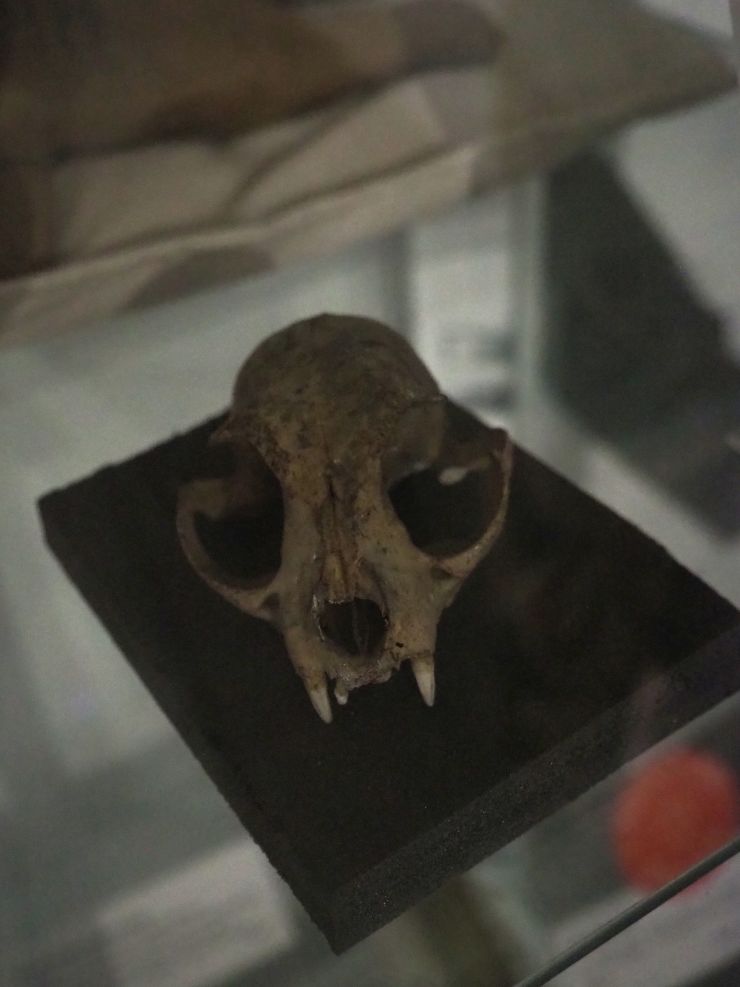
    Devastatingly, I could not make the final ‘Cats in Folklore’ talk, but I did explore the Fen and Folklore room in which it was to be held. One highlight was the ‘Lucky Cats’ exhibit, which contained various artifacts, one being an impressive cat skull which was representative of those that have been found buried within the walls of local buildings in supposed attempts to protect the inhabitants from witchcraft.

    Cat Skull at Cats of Cambridge at The Museum of Cambridge.
    Cat skulls were allegedly buried within walls to protect residents from witchcraft.

    The exhibit label also told of a Japanese folklore tale where, during the Edo period, a cat named Tama lead the ruler Li Naotaka into the Gotoku-ji Temple, saving him from a lightning bolt. According to the legend, Tama brought good fortune to both the temple and the passers by, and is represented in modern times in the form of the beckoning cat figurine, the Maneki-neko, which can be found in many of Cambridge’s restaurants and shops.

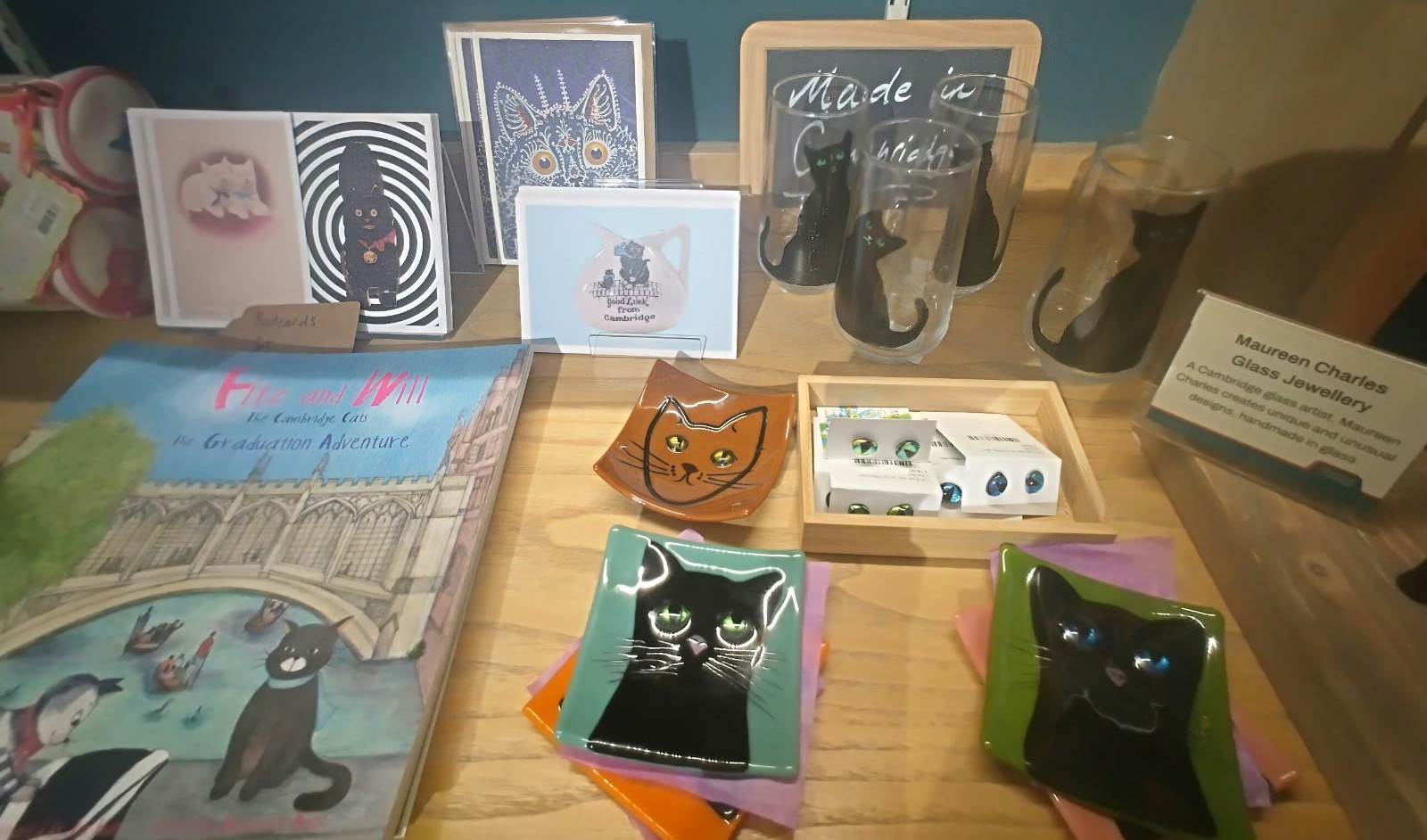
    As we filed out of the museum, I was thrilled to see a variety of handmade ceramics, books, jewellery, crafts and postcards, all made by local small businesses in Cambridge. There was also the opportunity to enter a prize draw to win a small selection of these gifts.

    A selection of handmade gifts including ceramics, cards and jewellery.
    A selection of handmade gifts available from the museum gift shop.
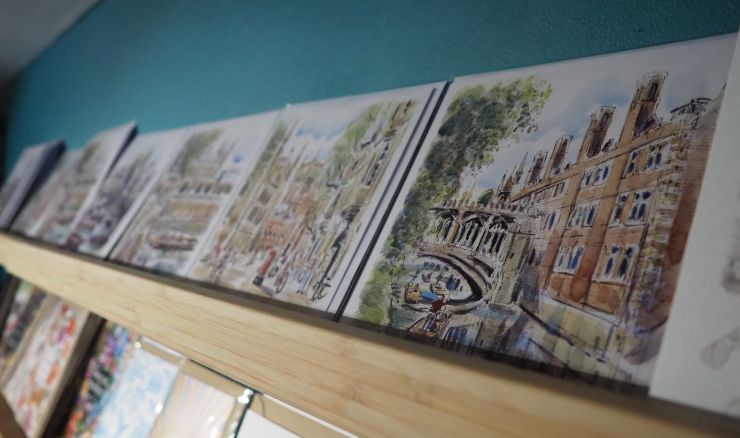
    Locally drawn artwork and postcards Cats of Cambridge at The Museum of Cambridge.
    Locally drawn artwork.

    So, what do we think – are cats friend or foe? Although I did not think it possible, I left the Cats of Cambridge exhibition more in love with cats than ever before. Whatever your view, it is hard not to be impressed by their history, especially that which is entwined with the city of Cambridge. That being said, I will probably continue to look at my own cat on a daily basis and wonder, does he really love me, or is he secretly hatching a plan to destroy me and everyone I hold dear? Only time will tell.

  • Jesus Green Lido

    Jesus Green Lido

    Daniel Versace

    The Lido at Jesus Green is without a doubt my favourite place in the city and I would even go as far as saying in the East of England.

    I’m not a born Cantabrigian, I wasn’t even born in the UK, but I have been lucky enough to call Cambridgeshire and this wonderful city my home.

    I wouldn’t say I live in Cambridge, I’m a little outside in one of the surrounding villages, but during the warmer months I make it a habit to cycle in at least three times a week before work and go for a swim.

    Obviously I won’t bore you with the benefits of physical exercise, or dive into a lengthy argument on cold water swimming; most of us know that at least one of these things is good for our physical and mental health. But it’s not just the swimming I’ve found to be beneficial.

    Actually, allow me to correct that common misconception. The pool really isn’t that cold from late Spring through to mid-autumn with temperatures around 19-24 degrees.

    Coming to a new city well into adulthood comes with challenges, but I’ve never shied away from such things. It’s often the opportunities to meet people which prove difficult. But I assure you the lido is just as much for exercising as it is about bringing a community together.

    Lidos aren’t just for swimming, they are places designed for recreational use, whether that’s yoga classes, sun bathing or spending time in the sauna. You can even grab a coffee from the Cafe. And if you ever forget your swimsuit or goggles the shop sells those plus a range of other swimming items.

    See, no matter what day of the week you go to the Lido, if you’re there at opening time, you will see the same faces. It’s these regulars and getting to know them that’s been the most positive experience I’ve found.

    It’s a little joke us regulars have that the Lido is the best kept secret in Cambridge.

    If cycling isn’t quite your thing, or you’re pressured for time in the mornings, you can park for free on Chesterton Road until 09:00 – just make sure you aren’t in the coach parking bay which kicks in at 08:30.