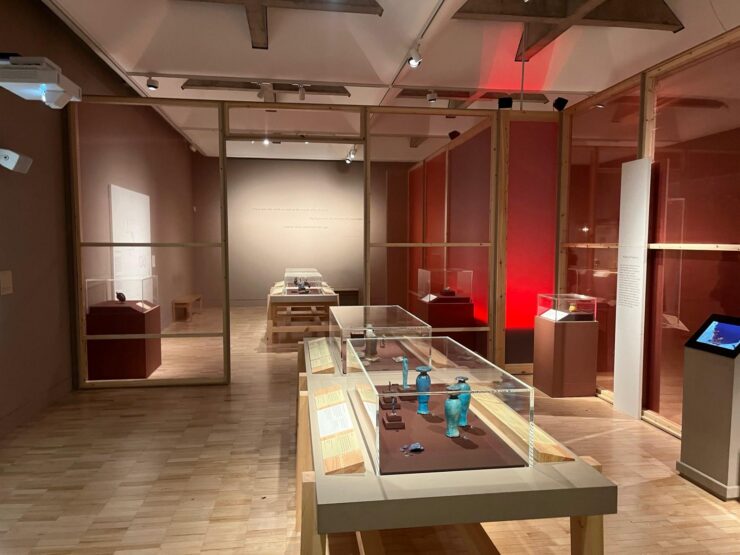
At the Fitzwilliam Museum
I have always studied Classics, but my interest in Egyptology came at quite a late stage. Despite the enticing grandeur and wonder of huge temples and extensive tomb complexes, that wasn’t what drew me in. I’ve always been more interested in daily life, which is why, when the Fitzwilliam revealed its exhibition Made in Ancient Egypt, I was over the moon.
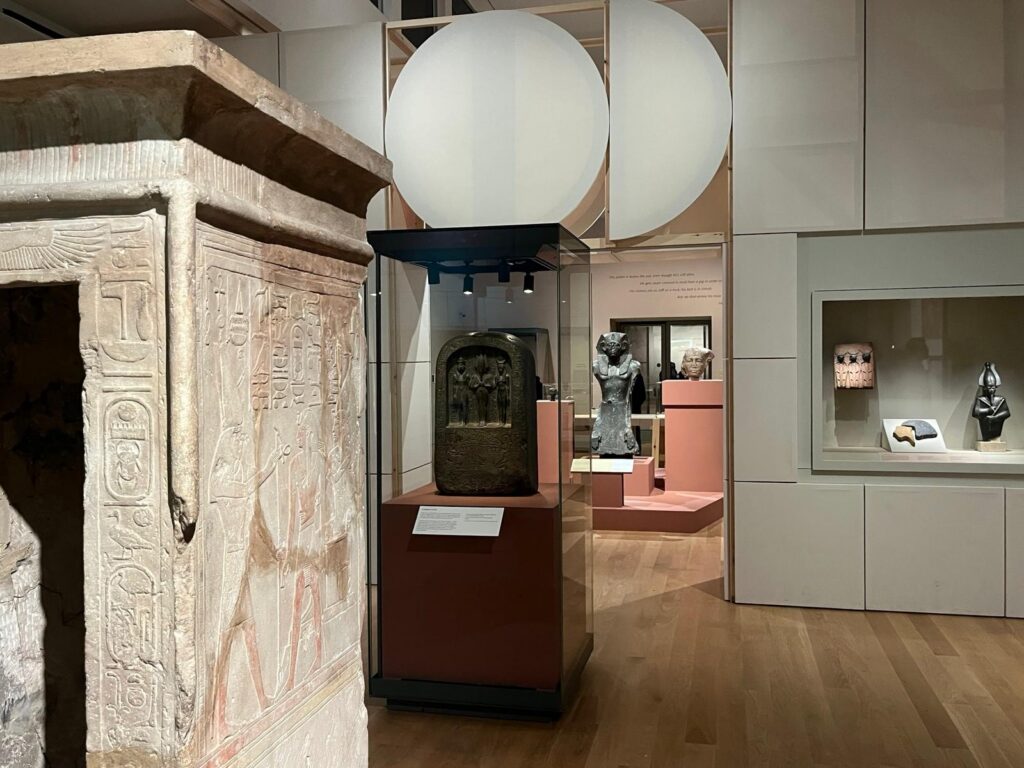
This exhibition focused on the craftsmanship and the craftspeople themselves behind the art and material culture of Ancient Egypt.
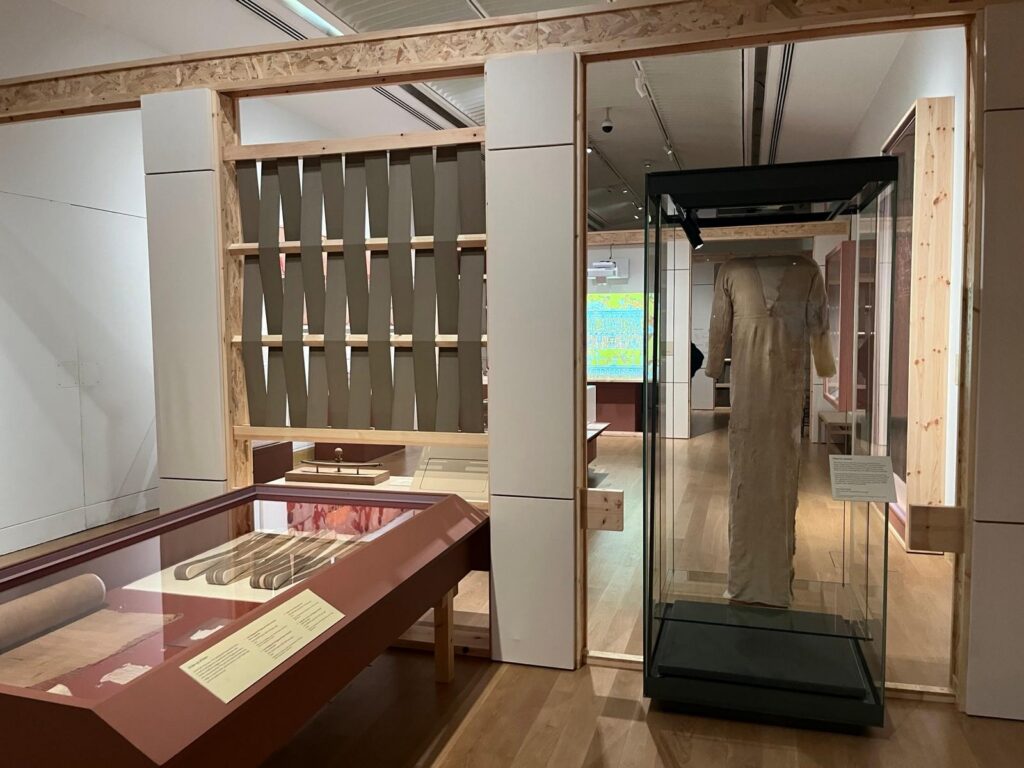
We marvelled at a gorgeous ancient dress dating back 4,500 years. The weaver had created it using only three pieces of linen. Garments like this were ideal for day-to-day use, particularly because linen was so well-suited to the hot climate. As well as being worn in everyday life, dresses like this would have been buried with the dead for use in the afterlife. This particular dress was found alongside eight others—a woman after my own heart, it seems.
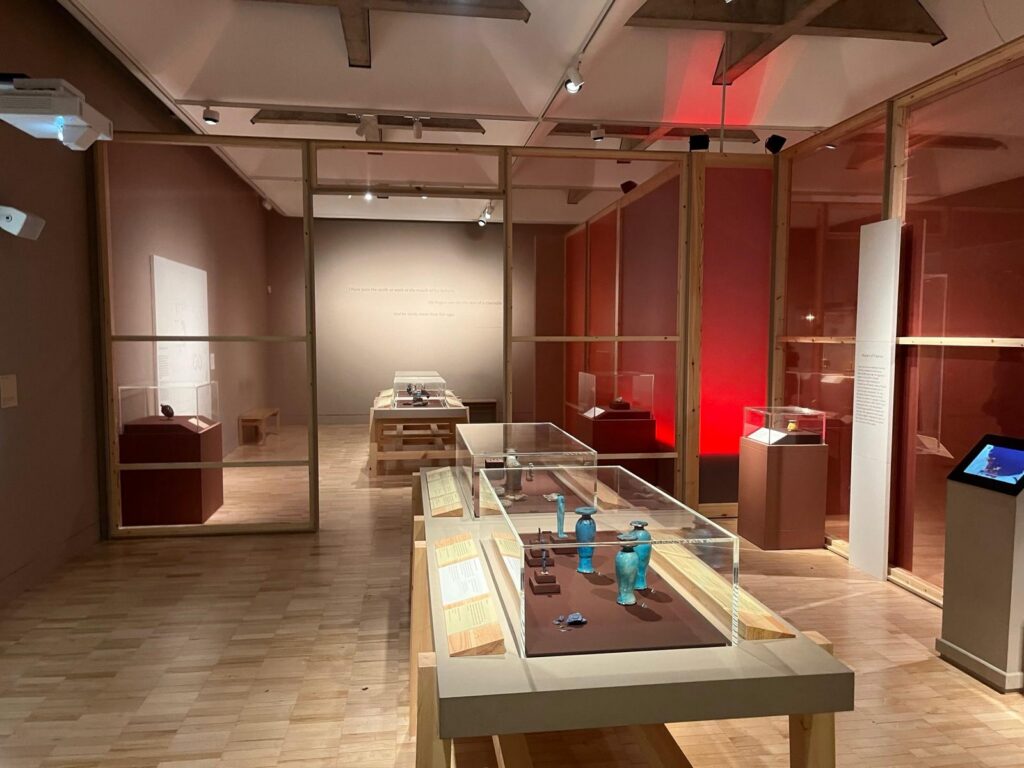
Glassmaking, featuring vibrant blue swirling patterns, was popular at Amarna. Fragments of failed vessels and the remains of kiln linings can often be identified outside the glassmakers’ workshops. Although only fragments, these examples were no less stunning in appearance and proved invaluable in helping us identify the processes through which these artists worked—arguably making them far more valuable to us than they ever would have been to the Egyptians.
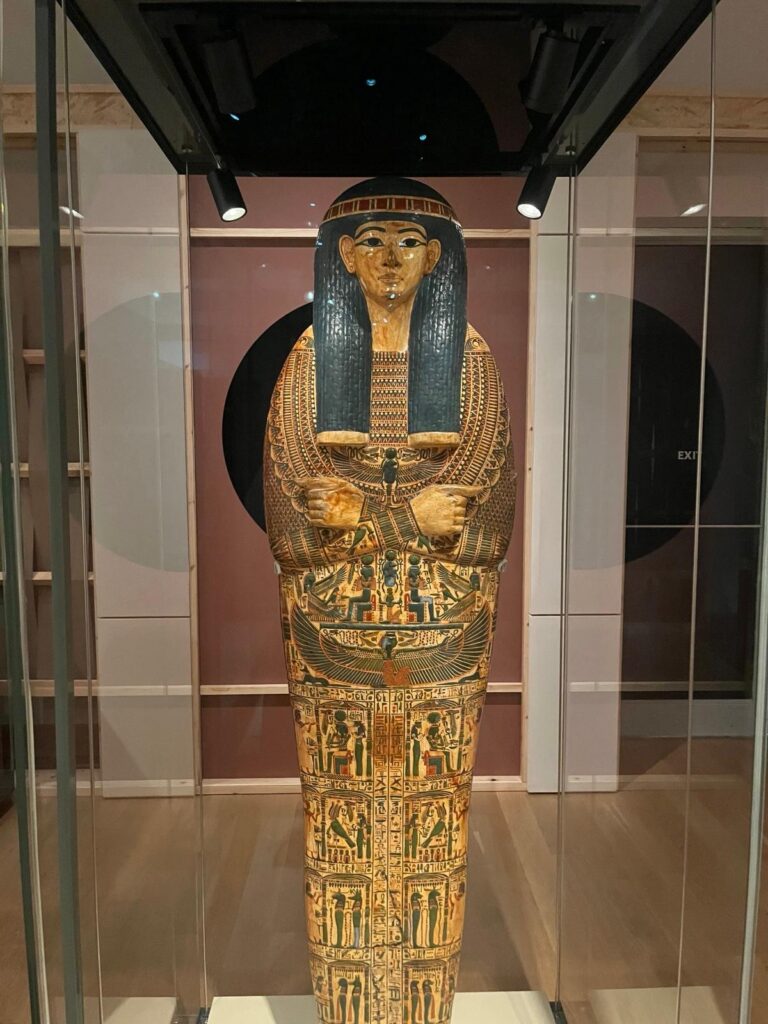
This mummy board was painted by a highly skilled artist over several weeks. Darker areas show where inscriptions had been re-varnished after being altered—not, probably, because of a mistake, but to reflect an update to the individual’s title or role before death (these were most commonly commissioned during life). This board wasn’t even the first thing you would see in the tomb; it sat on top of the mummified body of Nespawershefyt, within a set of coffins. Obviously, extensive decoration was a display of wealth, power and status but ultimately it was about more than that- it was for the eyes of the Gods. Interestingly, CT scan data revealed that the lid was likely repurposed from an older coffin. Evidence of tomb robbery during this period suggests it may, in fact, have been stolen from an earlier burial.
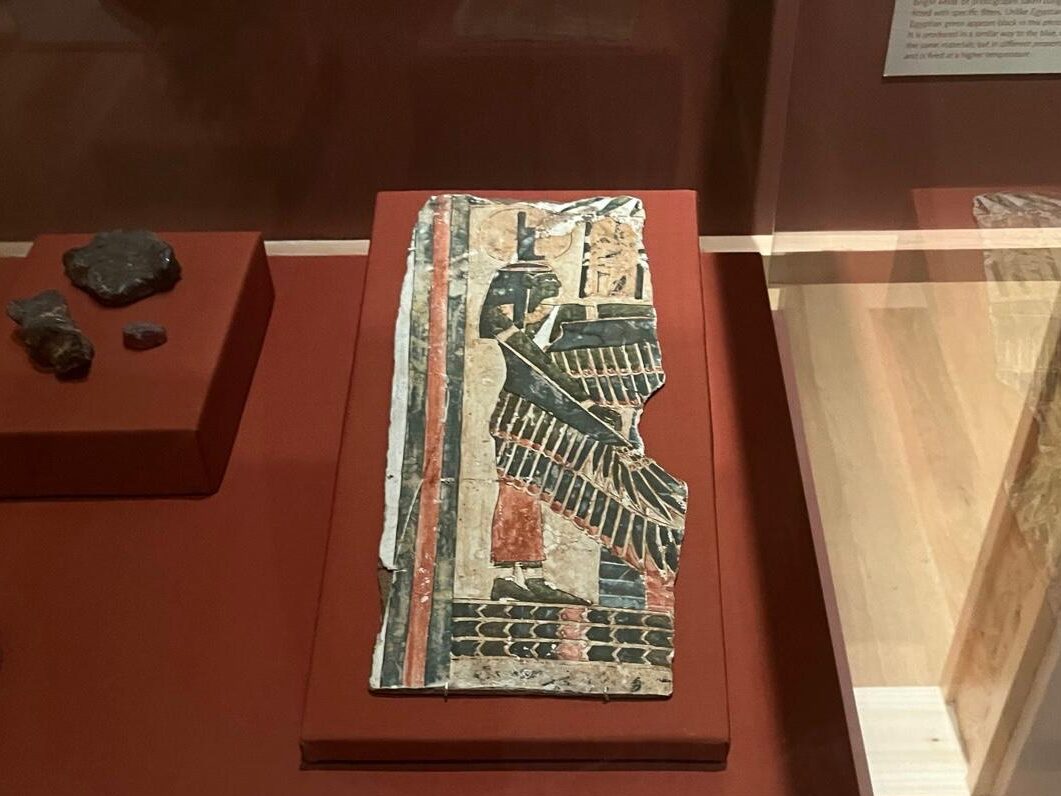
My favourite part of the exhibition was a partial fingerprint left behind on the face of a figure of Isis depicted on a coffin fragment—likely impressed into varnish that had not yet dried. Cases like this remind us of the humanity of a civilisation so often stereotyped as being obsessed with perfection. They remind us that these people were just like us: people who made mistakes and, more often than not, did a brilliant job of covering them up as best they could.
Overall, the exhibition did an incredible job of teaching us about the methods ancient artists used and preserving evidence of their existence amongst the gold and glamour of the ancient Egyptian pharaohs. Though I wonder if they would be turning in their graves, knowing their mistakes went down in history…